Saturday, October 26, 2013

Time.

I am two people.  I am not sure of the exact moment when the division occurred; It must not have been violent; It must have been gradual.  Yet, I can think of handfuls of moments and events that could be that right moment: the one I could point to and say, “That’s when I changed.  That’s when half of me faded almost to non-perception."  

And, half of my life, for the last few years, I almost completely forget that an important part of me exists at all... Almost. There is still a whisper in my mind telling me I’m missing.  Look for her.  She is here.  The specter torments me.  This half,  the part of me writing at this moment, doesn’t want to be alive.  I don’t want to exist.  I want the whisper to go silent.  I don’t want to hear it anymore.  I don’t want to be reminded of who I was, or who I could be.  I’m not.  I can’t.


When I am here, I have so little time--So very little time to find everything that I have lost.  Where’s my heart?  Where is my determination?  Where is my purpose?  Where is my fire?  You see, I always run out of time. I have to start all over again.  There is never enough time.  I never find what I’m looking for.  Yes, I think I’m crazy.  But it seems like a million artists have composed songs, written poems and novels, and plays, or crafted paintings that reflect this dichotomy--This feeling of emptiness or loss of part of who we were.

And, gosh darn it, there is this in between as I move from awareness from one me to the other, where I question if this is just my PMDD nightmare, or if it is something more?  If it is something more then I can change it.  I must have time.
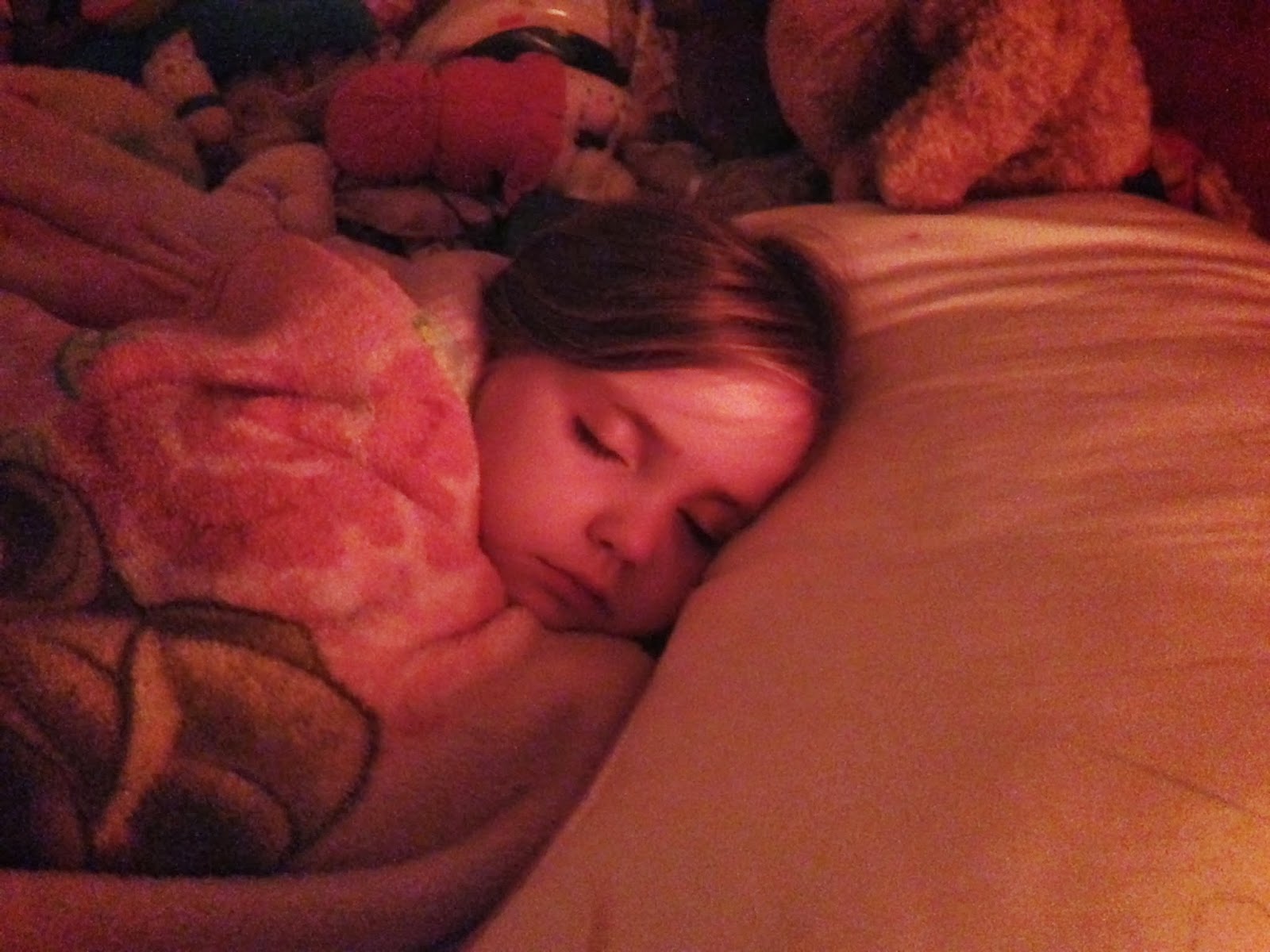

And then, something happens... just now!  Snap out of it.  I am one.  (It is so perfectly timed in my body, I could write down the exact minutes, sometimes, that the lifting of apathy and lethargy begins).  As I am writing, Sam comes downstairs, frustrated that Stella will not settle down for bed.  I put down the computer, and quietly walk upstairs, holding her hand.  I snuggle her with her three favorite blankets, then lay next to her.   

My Baby Boy


Now, Michael has always been easy to sing to sleep. I run my fingers through his thick hair, down around his ears, and along his neck.  I “tickle-rub” his back and arms with my fingernails…  I sing him American Pie (yes, I know all the words) most nights, and he drifts off, ever so peacefully.  (I often think his future significant other will have her work cut out for her because boys always seem to hold onto the comforting gestures of their mothers and want them repeated even when they are grown).  It is one of the most beautiful moments I experience as a mother--No, not just as a mother, as a person--To have my child fall asleep in my arms.  Stella looks like an angel when she is in slumber.  Her long, dark eyelashes resting lightly on her cheeks.  Her cupid bow lips parted slightly.  Her long hair splayed over her pillow.  She is all peacefulness and quiet…  The opposite of how she is when she is awake!  I have been teaching Stella her prayers at night.  And, like Mikey, she also likes me to tickle her back and arms with my fingernails.  She likes me to say the prayers over and over to her, while I tickle-rub her back, as she tries to allow her little brain to slow down, let wheels stop spinning—to calm herself.  She is so much like me.  I worry that she is so much like me.  

    
 But tonight, as I lay next to her, and wrapped my arms around her, I told her how she used to fall asleep in my arms when she was a baby. She said she felt safe and happy when she was in my arms.  And that is what will stop this madness. It has to.

I forget.  I sink into the well.  I have no one reminding me anymore.  I only have that whisper now, not a strong and sure voice of reason…  No one reminds me that those babies put me back together.  I should be able to listen to that rational voice and not the screaming voices in my head when I feel so terrible... But, I  know I just can’t do this by myself.  Not yet.  I’m still two people.  I’m messed up.  I just need someone to pull me up, when I am hugging my knees, my face pressed hard against them, rocking in sadness, thinking I am too far gone…

I am Mine


The selfish, they're all standing in line
Faithing and hoping to buy themselves time
Me, I figure as each breath goes by
I only own my mind


North is to South what the clock is to time
There's east and there's west and there's everywhere life
I know I was born and I know that I'll die
In between is mine
I am mine


And the feeling it gets left behind
All the innocence lost at one time
Significance behind the eyes
There's no need to hide
We're safe tonight


The ocean is full 'cause everyone's crying
The full moon is looking for friends at high tide
The sorrow grows bigger when the sorrow's denied
I only know my mind
I am mine


And the feeling it gets left behind
All the innocence lost at one time
Significance between the eyes
There's no need to hide
We're safe tonight


Sunday, October 13, 2013

I love breathing, not mucus.

Allergies are quite despicable.  I don't want them.  I have them.  Now, since I have to have them--no way around it--I would love to have the kind that just makes you sneeze.  Sneezing is kind-of funny.  I was even informed by my college roommate--after I told her, and a group of my friends who were passing a bowl in our apartment living room, that they were making themselves stupider--sneezing actually kills more brain cells than smoking the ganja.  Now, I'm not quite sure how that qualifies as a check in the old "sneezing kind of allergies are better" box, but I thought it was a ridiculous thing for her to say, and I responded to her informed fact with the statement, "Wow... See? It's already too late for you..."  Sneezing is funny and does not make you stupid.  Don't smoke marijuana.
That grey fluffy stuff is air, not pot smoke in the diagram...

Snort.

I don't sneeze a whole lot unless I encounter a dog.  Instead, I experience severe swelling of all the nasal and sinus passages, and excessive mucus secretion that drains down the back of my throat.  I mean, think about having this huge, gooey mucus mass just settling into your nasal tube thingys that connect to the old throat... It feels just like that.

On top of that fun sensation, my face feels compelled to make this horrifically obnoxious and unladylike snorting sound constantly, which neither helps move the mucus mass nor aides my breathing in any way.  It's just an involuntary nasal snort.  It's a snort that also involves a vibrating sound in the back of my throat.  It is not funny.  It is not even kind of funny.

Snort, Snort.

I have always had seasonal allergies and pet allergies, but taking Claritin D, beginning when I was in middle school, kept any symptoms at bay.  I could live a normal, snort-free life with just one prescribed medication per day.  I even lived with at least two cats in my house my entire childhood and teen years.

Snooooort.

However, after  the allergy fiasco at the high school,  where I was teaching up until this school year, (which could have been caused by mold; or another host of things in the air that I was constantly exposed to, and just did a number on my respiratory system), I have not been the same.  Typical allergy tests actually show I have no allergies what-so-ever, which would totally rock my world if those tests were accurate.   I had endoscopic sinus surgery in April. I am on allergy medication, a steroid nasal spray, Albuterol sulfate through an inhaler, a daily nasal wash, and oral steroids any time things get really bad, and I still am snorting like a pig.  I still have a mucus-sludge slide running down my pharynx.  Gross?  I could just use the common medical term and say. I have "postnasal drip." Yet drip is an inadequate descriptor for the mucus party happening all up in my face.  Even "postnasal" doesn't sound so bad...  That might make you think, "Oh, haha, the drip comes out of the nose!  Just carry a tissue, for Pete's Sake."  If I could hear your thoughts while you were thinking that, I would think in a really mean thinking process, "Nothing will even come out of my nose, dingbat!  I can blow my nose until the cows come home, and nothing comes out.  It's in my gosh darn throat.  It is sliding down my gosh darn, son-of-a-bitch, throat."  Good thing we can't read each others' minds.

Snorttttt.

And so, a lovely parting gift, among the many I have received from that old school of mine, is Chronic Allergic Rhinitis, Chronic Sinusitis, and Asthma.  And guess what: Those are all classified as diseases. 

Surgery could only help lessen the chances of sinus infections due to the inflammation caused by the...  You get the picture.

Here's a tip for you:  If you feel constantly congested, or experience wheezing on a regular basis in any environment, go to a doctor immediately and take it seriously like s/he will ask you to.  I wanted to teach.  I love teaching.  I took medicine and kept teaching.  Now I have three diseases.  Don't take my word for it?  I'll offer you a bit of scientific information at the bottom here:


This diagram is quite self-explanatory, but for those of you who don't understand it, the description below covers it. 

During the first exposure to allergen, contact is made with B cells that differentiate and produce IgEantibody. The IgE against the allergen is released into the bloodstream and eventually binds to Fc receptors on mast cells and basophils. The mast cells are now sensitized, laying in wait for the second exposure. Upon contact with allergen a second time, it now attaches to IgE present on mast cells causing degranulation. On the cellular level, the granules present in the cytoplasm migrate to the cellular membrane and spill out their contents into the surrounding area. This results in the release of histamine, slow reacting substance of anaphylaxis (SRS-A), heparin, prostaglandins, platelet-activation factor (PAF), eosinophil chemotactic factor of anaphylaxis and proteolyticenzymes. This cocktail of proteins are the mediators of inflammation and they trigger a number of physiological responses including smooth muscle contraction, an increase in vascular permeability and mucous secretion.
In its most severe form, systemic anaphylaxis, there is a generalized response. Exposure to allergen causes an immediate, large amount of mast cell response over a short period of time. This results in large concentrations of the mediators of inflammation being released all at once. Individuals experiencing systemic anaphylaxis have trouble breathing due to smooth muscle contraction causing the closing of the bronchioles in the lungs. Arterioles also dilate, resulting in a drop in blood pressure and capillary permeability that causes a loss of fluid into tissues. Victims of this response can die within minutes from reduced blood return through the veins, asphyxiation, low blood pressure and circulatory collapse leading to shock. Quick treatment with epinephrine (increases blood flow and inactivates mast cells) and antihistamines (combat histamines) is essential to prevent death. Common allergens in this type of reaction are penicillin, passively administered antisera and insect venom from bees or wasps.
Localized anaphylaxis (atopic allergy) is a less severe form of anaphylaxis, whose symptoms depend primarily upon how the allergen enters the body. In hay fever (allergic rhinitis) the allergen enters the upper respiratory tract. Common allergens in hay fever include pet dander, pollen, fungal spores and household dust mites. Exposure to these particles causes the typical symptoms of hay fever, i.e., runny nose, itchy eyes, coughing and sneezing, most of which are indicative of the action of mast cells. Treatment typically involves the use of antihistamines to block the action of histamine released by mast cells.
Bronchial asthma results when the site of immunological response is the lower respiratory tract. The same allergens that irritate the upper respiratory tract in this case cause the symptoms of asthma. Mucus accumulates in the alveoli (air sacs) of the lungs and smooth muscle contraction of the bronchi narrows the airways and causes the characteristic wheezing of asthma. Bronchodilators that relax the bronchial muscles and expectorants that clear mucous plugs in the lungs can relieve most of the symptoms of asthma, but it is still a serious illness that can be fatal if treatment is delayed for too long.

Sinus Infection


Airborne allergens such as ragweed pollen, mold spores, cat dander and dust mites affect the respiratory system, producing classic hay fever-type symptoms of sneezing, runny nose and congestion. Patients with untreated allergies or controlled long-term allergies can experience sinusitis or otitis media side effects, if exposure continues. According to the MayoClinic.com, bacterial or fungal sinus and ear infections can pop up again and again in people with immune systems weakened by frequent allergic reactions.


Read more: http://www.livestrong.com/article/265913-the-effects-of-prolonged-allergy-exposure/#ixzz2he9KxkAa


Lung Infection


Prolonged mold exposure triggers long-term allergies and raises the risk of lung infection, or aspergillosis. When sensitive individuals inhale mold spores, these minute particles can lodge in the lungs and begin to grow. Patients with asthma or cystic fibrosis may have an immediate allergic reaction upon inhalation, the MayoClinic.com reports. Others may not know that fungal spores have invaded the lungs until a ball of mold growth damages lung tissue. Coughing up blood, trouble breathing, chills and fever may all occur. Medication or surgery may be needed to control and remove infectious mold growths.


Read more: http://www.livestrong.com/article/265913-the-effects-of-prolonged-allergy-exposure/#ixzz2he9TdoZx

Saturday, October 12, 2013

The Family of Man.