Friday, December 30, 2011

Phone Calls.

I said it before, I am a worst case scenario type of girl.  When the phone rings, it's some terrible news. Since I got married, I had terrible dreams of losing Sam.  What would I do if he died?  How could I live without him?  How can we commit our love and life to someone when there is a possibility we might lose them?  I can't even talk about my babies...  Being pregnant is stressful for various reasons, but for me, the worry that they might not be healthy drove me crazy.


When we found out we were having twins, my first reaction was, "Oh my God, one of them is dead."  The doctor said, "Um, no, no it's not."  My husband asked, "Are they Siamese?"  The doctor looked at both of us and said, "Are you okay?"


This whole twin thing was a big surprise for us.  We were just going to find out if we were having a boy or girl, and during the scan, the doctor looked puzzled, concerned and then held up two fingers, like a peace sign.  We hadn't met Doctor Bunker yet so we were like, "So everything's good...?"  (Like Peace, rock on, baby's healthy, hooray).  He said "TWO," and we, of course, kept saying, "What? What?  What?  What?  No way,  Wait, what?!"


So, now, because my hormones seem to be out of whack, Sam and I thought that maybe the best form of birth control for us was for him to get a vasectomy.  But then I mulled it over and over and realized that this was not a good idea.  He thought I was being a little crazy when I was snuggled up on his chest one night and said, "You can't do it.  What if I die?  You'll want to have a baby with your new wife."  Sam was like, "Um, okay, not going to happen."  But I know enough to know things like that can happen.  I also know that one of our children could die, and even thinking about that horrible thing causes waterworks).  I wondered if we would want to have more children if that happened.  Then the vasectomy would be a terrible idea.  (Before I move on, I must say that the surgeon mentioned the same scenarios to him, so I am not crazy!)


Four generations.
So, dwelling on the worst possible things is destructive.  I know that, of course, but I also suffer from depression so I can't tell myself to just think happy things.  I try to find my sense of humor about life, when stress starts to get to me.  I really try to laugh at myself, but I'm a pretty sad girl when it comes down to it.  In college Psychology, I, a large lecture hall class at UVM, the students took a survey on mental health.  Mine resulted with something like, "Seek psychological, medical attention immediately..."  And I was only 18 at that point!  How little I knew about the world at 18.

Last night my father called to tell me to come to work today.  We teach at the same high school, in the same department.  I was out yesterday with another stress headache that radiates across my forehead, down behind my ears, down my jaw, neck, shoulders...  He misses me when I'm not there.  My mom got on the phone and told me, my nanny isn't doing well.  She told me that she sounded very weak, and like she was giving up.  Grampy John died this past May, and she misses him so much.  Nanny and Grampy epitomized unconditional love.  She has been floating since he died.  She hasn't gone home since May 19th and is just staying with my aunts and uncles as if life were a temporary situation.  My mom talked to me again about Nanny, this morning, when I called from work to check on my kiddos, and when I got home from work.  How do I function as a teacher when I'm thinking about this?  How do I function as a mother when I'm thinking about this?   I guess I don't know.  

Sam just brought me a big glass of red wine.

Wednesday, November 30, 2011

The Cure. The Cure?!

So I read this article: A Cure For Depression? on Gizmodo

The Pill That Could Cure Depression by Growing Your Brain

Science
Kristen Philipkoski
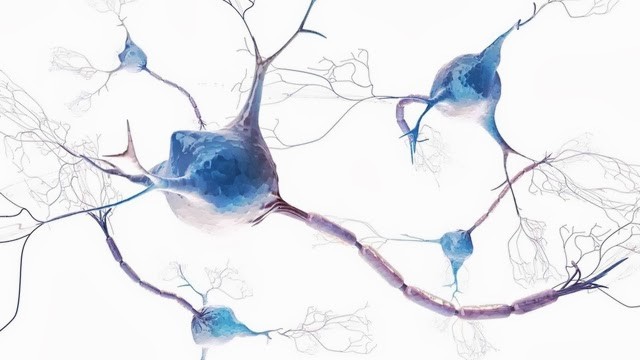
"If you are depressed, or schizophrenic or have Alzheimer's, scientists say you probably have a shrunken hippocampus. The good news: a drug that just entered human trials promises to re-grow that part of the brain..."
And that's how the article began...  That's all I had to read, before I knew I would sign up for this trial.  If you live with depression, and people you love live with depression, you'd be willing to be a guinea pig for scientists.  Heck, you'd let them open up your skull and poke around if it was going to change something.  I'm ready for a cure for clinical depression.


I found the article linked above pretty interesting, but I also have discovered that the comments written after an informational article are as interesting as the story itself.  I found myself agreeing with some, angered by others.  What do people really know, unless they're in the thick of it?  What do they know, if they don't have depression?  Not a damn thing:


"Emotional problems? Have more pills?
This will come off sounding trollish, but that shows how little you know."


"Yes. Pills that possibly cure the emotional problems so you can end up with zero pills AND zero problems. Sounds like a good deal to me."


"I don't get this common idea that medicine is somehow bad for you. Yeah, it usually has side-effects. And yeah, it would be better if we didn't need it. But human bodies are complex systems, and we get sick. No one gets worried about running an antivirus on your computer, so why worry when you do the same thing on yourself?"


"I have a friend who has tried pretty much every anti-depressant cure on the planet, nothing works. And, it IS a chemical depression, he isn't just really bored or has Mono."


"Depression is a chemical imbalance and a real illness. Don't fool yourself into thinking it's merely an 'emotional problem.'"
"Depression is the cancer of the soul. And telling somebody with depression that they just have 'emotional problems' is like telling somebody with lung cancer that they just have 'breathing problems.'"


Okay, that one...  I wished I wrote that one...  I have clinical depression, and many people in my family suffer from depression.  It's so scary when there aren't any effective treatments.  Imagine being apathetic about everything:  Your children, you spouse, your job, your self.  It's horrible. It's trial and error with meds, until the brain responds to something. People marginalize depression all the time:  "Exercise will help.  You need more exercise."  "Try meditation, it's all in your head"  "You just need to get out of bed, and into the sunshine."  


"Depression is distinct from nebulous emotional problems, but 'cancer of the soul?' You do yourself a disservice with this kind of metaphysical claptrap.  :)"


"Because as a last resort, you can't just reformat yourself, unfortunately."


I can't tell you how many times I have wanted to have some sort of restart button for my brain, and sometimes my life.  I have actually researched selective memory removal, which doesn't really exist, unfortunately, like Eternal Sunshine of the Spotless Mind.  I know the point of the movie is that this kind of existence would be destructive and terrible, but I can't help but think it sounds pretty awesome.  If any scientists are planning on trying to do this for real, I'll volunteer.  

Monday, November 7, 2011

Mother Women.

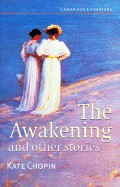
I'm not sure when things changed for me.  I read The Awakening in 2010 with my Senior English students, and I found Edna Pontellier to be very selfish and irresponsible.  What about her children?!  How could they be so far from her mind, when my children overwhelmed my thoughts constantly?
This quote didn't offend me, it inspired me:


"The mother-women seemed to prevail that summer at Grand Isle. It was easy to know them, fluttering about with extended, protecting wings when any harm, real or imaginary, threatened their precious brood. They were women who idolized their children, worshiped their husbands, and esteemed it a holy privilege to efface themselves as individuals and grow wings as ministering angels."   


And then, things changed...  Life changed.  Life changed.  In 2011, I found myself defending Edna.  I remember two male students, who also took the side of Edna in a debate for or against the mother woman standard,  and argued:  "Her husband should have known.  He should have talked to her and found her help and told her it was okay.  He should have helped her."  I remember sitting there listening to my students intelligently analyze this female character and I thought, "Heck yeah, pay attention buddy!  It's not all about you."  Really, how many men have this problem? How many men hear only 25% of what their wives say?  How many men stopped listening?  How many never listened at all?


This was at the conclusion of the novella, as we discussed, "Did Edna have another option?"  Of course any woman has another option to drowning herself in the ocean when she feels caged and stifled by life, and family, and duties.  Edna was from a very different time period.  Yet, many mothers still allow themselves to be lost to their children.  They become Mother and not just a mother.  As Edna came to her awakening, she said to the golden sunshine character who embodied mother-woman, "I would give up the unessential; I would give my money, I would give my life for my children, but I wouldn't give myself. I can't make it more clear; it's only something which I am beginning to comprehend, which is revealing itself to me." Madame Ratignolle understood none of these words Edna was uttering.  She did not hear her plea for understanding.  Yet this time, as I read the story this quote was most inspiring.  Aren't children more blessed with a strong, smart, engaged, and worldly mother, than a doting mother?  Can we dote... Sometimes?


I have twins.  It was so easy to fall into a single role to just stay sane and survive.  I gave myself to my children.  Now that I am also beginning to comprehend this--that maybe I can be a wonderful mother and a wonderful individual simultaneously--I feel happy.  I wasn't happy.  Does a good mother admit that?